Home DISC Assessment
DISC, communication and teamwork
DISC Assessment and workshops in Malaysia
Understand how your people communicate, decide and handle pressure, then turn that insight into better collaboration. Certified DISC profiling and workshops led by Edward Chan (MAPPCP).
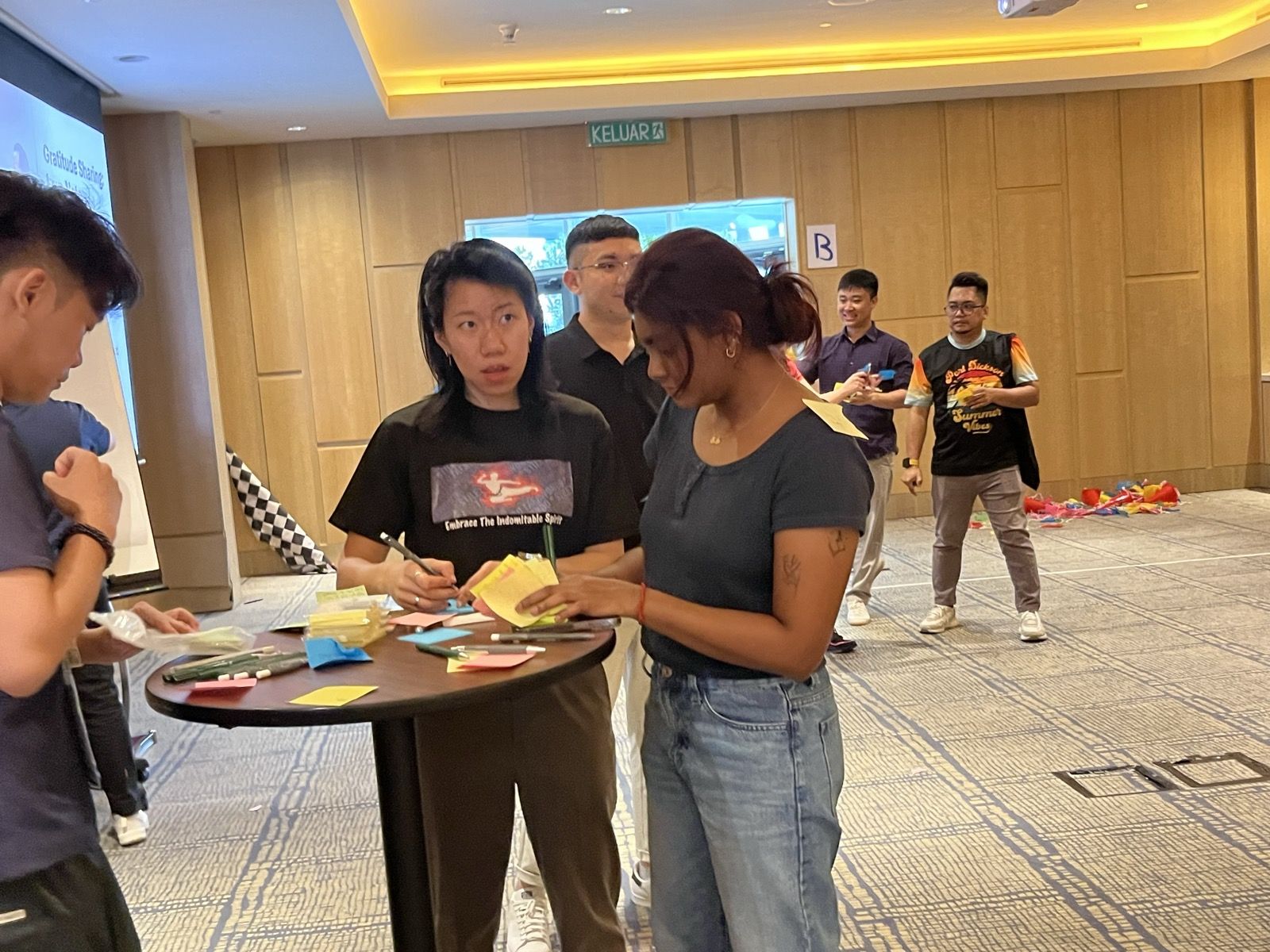
What is a DISC Assessment?
DISC is a behavioural assessment that describes four main styles of how people prefer to act and communicate at work. Everyone uses all four, in different amounts.
D: Dominance
Direct, decisive and results-focused.
I: Influence
Interactive, optimistic and people-oriented.
S: Steadiness
Sympathetic, cooperative and dependable.
C: Conscientiousness
Concerned with quality, planning and accuracy.
A DISC profile helps people understand their natural style, how others see them, and how to adapt when working with different personalities. There are no good or bad styles.
How we use DISC
- Individual profiles completed before the workshop, with a personal debrief.
- Team mapping to see where your team is heavy, where it is light and where friction comes from.
- People reading with the Speed-Read Technique, so participants can recognise styles in colleagues and clients.
- Delegation and managing upwards using the Skill/Will Matrix, the Influence/Impact Matrix and the Minto Pyramid Principle.
- Combined with EQ-i 2.0 for leaders who want to go deeper into Emotional Intelligence.
Edward is a Certified DISC Assessor and EQ-i 2.0 / 360 assessor. DISC also features in several of our other programmes, including The Captain's Call, The Composed Leader and S.T.E.P.S.
Our signature programme
DISCover Your Leadership Style
Turn DISC from a personality report into a practical tool for communication, delegation and managing upwards.
- Who it's for
- All employees, especially people managers; recommended class of 15
- Duration
- 2 days, customised
Starts with: DISC profile and team map
Every participant completes a DISC self-assessment before the session and receives a personal report. We then map the whole team to show where it is heavy, where it is light, and where friction comes from.
What participants learn
- The Speed-Read Technique (pace vs. priority) to recognise the four DISC styles in colleagues and stakeholders
- Building trust with each style using the Trust Equation and the 6C Emotive Needs
- The 4-Sided Communication Model and the Platinum Rule for difficult or emotional conversations
- DISC team mapping, silo busting and strength-based delegation with the Skill/Will Matrix
- Managing upwards: the Influence/Impact Matrix and the Minto Pyramid Principle
- The dark side of DISC: using it as a guide, not a label
What our participants say
Very insightful. I got to know myself better, and learned how to manage my manager's and team members' expectations and behaviour by identifying their DISC styles.
Edward was a very thoughtful and encouraging trainer. DISC helped me think from the perspectives of my colleagues.
The coach is easy to approach. He studies his audience and teaches according to their personalities, so we understand more.
- 4.7/5Overall satisfaction with the trainer
- 4.7/5Trainer's knowledge & expertise
- 4.7/5Trainer kept participants engaged
- 4.6/5Would recommend to colleagues
Participant ratings out of 5, consistent across leadership, DISC, Emotional Intelligence and wellbeing programmes from 2024 to 2026.
Common questions
More answers on our main FAQ.
What is a DISC Assessment used for?
A DISC Assessment is used to understand behavioural and communication styles at work. Organisations use it to improve teamwork, communication, leadership, conflict resolution, delegation and people management.
What do the DISC letters stand for?
D stands for Dominance, I for Influence, S for Steadiness and C for Conscientiousness. These are the four behavioural styles in the DISC model.
Is DISC a personality test with right or wrong answers?
No. There are no good or bad styles. DISC describes preferences, not ability. The goal is self-awareness and adapting to work well with others. We also cover the 'dark side' of each style so it is used as a guide, not a label.
Are all your programmes customised?
Yes, every one. Each programme starts with a discovery call or meeting to understand your exact pain points, who is attending and what needs to change. We then design the content, case studies and activities around your organisation. We don't have any off-the-shelf programmes.
Are your programmes claimable under HRD Corp?
Yes. Edward is an HRD Corp–certified trainer (Train-the-Trainer, TTT/11242), and our in-house programmes can be structured as HRD Corp claimable training for registered employers. Share your dates and headcount and we'll advise on the scheme and prepare the supporting documents.
Tell us what you want your people to do differently.
We'll start with a discovery call, then design a programme around your team, with an assessment built in. Most programmes can be HRD Corp claimable.